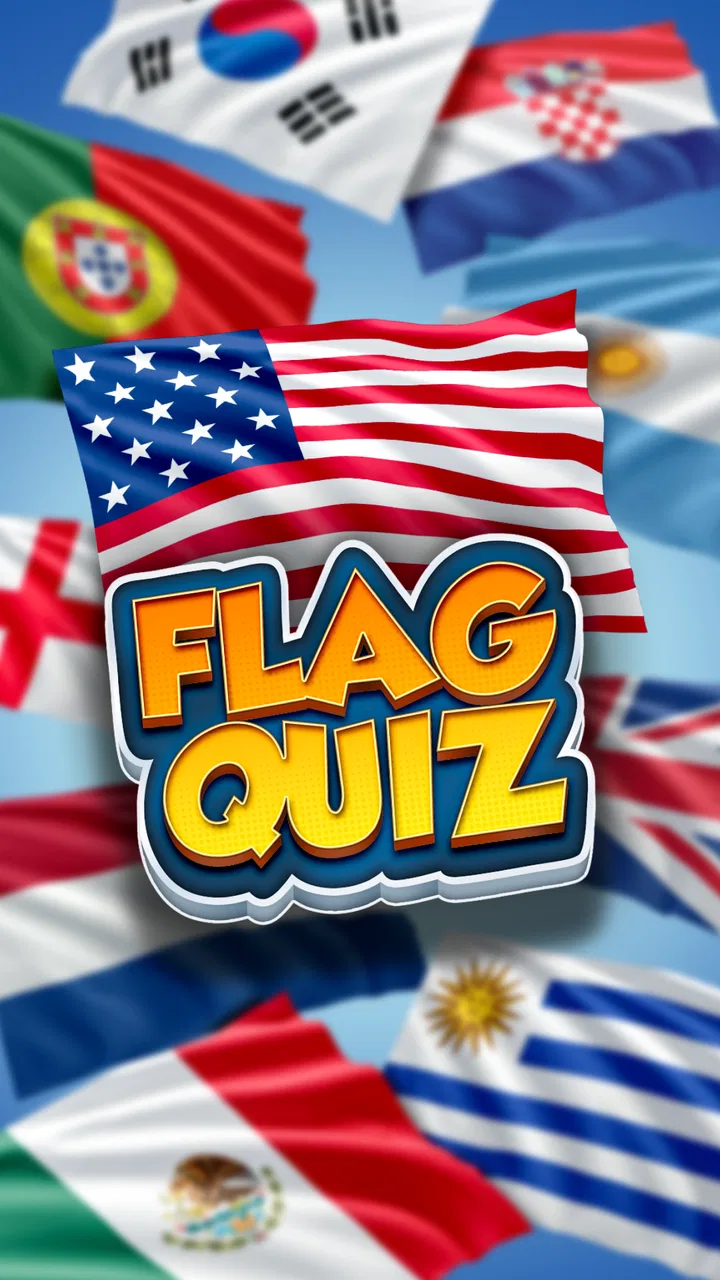
Flags Quiz - Guess The Flag
- 4.8
- Rating
- 5.00M
- Installs
- Free
- Price
 Analysis by App-foxy
I enjoy trivia games that teach me something without feeling like homework, and Flags Quiz - Guess The Flag fits that mood surprisingly well. I spent time with it as a geography challenge rather than treating it as a simple collection of flag pictures, and my main impression is that it works best in short, focused sessions. You look at a flag or map, make a choice, and gradually discover which parts of your world knowledge are solid and which ones are based on vague visual guesses.
This is a free trivia game from PrizePool Studios, aimed at players who like geography, quick quizzes, and lightweight challenges they can return to whenever they have a spare moment. Its central idea is straightforward: identify countries through flags and maps. That simplicity is also its biggest strength. You do not need to learn a complicated control scheme before you can begin, and the subject gives the game a useful purpose beyond passing time.
The game has attracted a 4.7 average from around 55 thousand ratings and has passed 5 million installs, which suggests that its format is easy for a broad audience to understand. It is marked for Teen players, and the free download includes optional in-app purchases ranging from $0.99 to $49.99 per item. I would approach it as a casual learning game first and a competitive trivia experience second, because its real value comes from repeated exposure to flags and country shapes.
You May Also Like

 AccuWeather: Weather Radar
AccuWeather Review: A Quick, Clear Forecast for Everyday Decisions
For everyday plans, the best forecast is the one you can understand quickly. AccuWeather makes rain timing, radar, and local conditions easy to act on, with a few trade-offs.

 Hill Climb Racing
Why Hill Climb Racing Still Turns Crashes Into One More Run
A tiny car, a bumpy hill and one more upgrade: Hill Climb Racing keeps resurfacing because its simple chaos makes every near-miss feel personal.

 AliExpress - Shopping App
AliExpress Makes Global Shopping Feel Personal, but Shoppers Bear the Risk
AliExpress turns a global marketplace into a pocket-sized discovery engine. Its reach is useful, its shopping loop compelling, and its trade-offs easy to miss.

 Lords Mobile: Kingdom Wars
Lords Mobile Is a Kingdom-Building Routine, Not a Quick Match
A case-by-case verdict on the building, battles, device demands, and social commitments that make Lords Mobile rewarding for some players and exhausting for others.

 PDF Scanner app - TapScanner
TapScanner Makes Paperwork Easier to Capture, Check, and Share
TapScanner makes scanning with a phone feel less like a rescue operation and more like a dependable step in getting work done. Its capture tools are useful, though not flawless.

 Block Blast!
 Shows How Much a Puzzle Game Can Leave Out
A quiet grid game shows why puzzle players increasingly value instant clarity, repeatable skill and low-pressure play—and where the genre still needs to catch up.
More From Our News Desk
View All News


How the quiz feels in everyday use
I find the quiz works best when I treat each visit as a small observation exercise, not a race to tap the first answer that looks familiar. Looking for one distinguishing detail before choosing—such as the arrangement of colors or the shape of a country—helps me turn a quick guess into a more dependable memory. That everyday rhythm also sets up the next question: how the game’s feedback can make mistakes useful.
Quick sessions are where it feels most comfortable
The most natural way to use Flags Quiz is in small bursts. I can imagine opening it while waiting for an appointment, taking a few rounds during a commute, or using it as a relaxed break between more demanding tasks. The subject matter makes those short sessions worthwhile: even a handful of questions can reveal a flag detail I had overlooked or remind me that two countries use much more similar designs than I expected.
Its perceived speed is part of that appeal. A geography quiz should not feel like it is asking the player to manage the game instead of answering questions. Here, the basic interaction is direct, so the experience feels suited to quick decisions. I would not choose it for a long, story-driven evening, but I do like the way a short visit can still feel complete rather than requiring a large time commitment.
The game’s store summary points to more than 1,000 flags and maps, and that scale gives the concept room to stay interesting after the easiest questions. It also creates a clear learning curve. Familiar national symbols may be comfortable at first, while less recognizable flags and country outlines force a slower look. That change in difficulty is important because a quiz containing only famous examples would lose its educational value quickly.
Why flags and maps test different kinds of memory
Flag questions rely heavily on visual memory. I may recognize a color arrangement without remembering the country name, or know the country but confuse its flag with a neighboring nation’s design. Map questions work differently. They ask me to think about shape, position, and regional context rather than isolated colors and symbols. Switching between the two gives the game more depth than a single-format flag quiz.
One practical way to improve is to treat wrong answers as study prompts instead of simply moving on. When I miss a flag, I try to identify the exact source of the mistake: similar colors, a reversed pattern, an emblem I ignored, or a country shape that I mentally simplified. That small habit turns the game into active recall. It is more useful than tapping quickly and hoping repetition alone will do the work.
I also find it helpful to group unfamiliar countries by visual traits. For example, I might remember a distinctive emblem, a particular stripe arrangement, or the outline of an island before I remember the national name. This approach is especially useful for players who are interested in geography but do not yet have strong memorization skills. The game gives them a visual starting point rather than demanding that they already know the answer.
What happens when the sessions become longer
Longer sessions are possible, but they expose the limits of the format. Repeated quiz prompts can begin to feel similar, especially when I am concentrating on accuracy rather than learning a new topic. The game is more effective as a recurring challenge than as a single marathon. Returning later gives the material time to settle in memory and prevents the questions from blending into one continuous stream.
Heavy use can also make the player more aware of the game’s dependence on visual attention. Looking closely at flags and map outlines is more tiring than answering general-knowledge questions with short text prompts. I would lower the pace when playing for a while, particularly on a smaller phone where fine details may be harder to distinguish. That is not a flaw in the subject itself, but it does affect comfort during extended play.
A useful routine is to alternate confident answers with deliberate review. I might play until I notice that I am guessing too quickly, then stop rather than treating careless mistakes as a fair measure of my knowledge. On another visit, I can focus on the regions or visual styles that caused trouble. This makes the game feel less repetitive and gives each session a clear purpose.
Stability and what I would expect from the current build
The current version is 2.0.3, and the game’s straightforward design gives me the impression of an experience that should be easy to pick up and resume. I value that kind of reliability in a casual quiz. If I only have a few minutes, I do not want to spend that time navigating layers of menus or rebuilding my focus after an interruption.
At the same time, I would keep expectations realistic. A game built around many visual questions can still feel demanding if the device is older, the screen is small, or the player is using it for a long period. Perceived smoothness is not only about whether an app opens quickly; it is also about how comfortably the information can be read and how easily the player can continue after pausing. Flags Quiz benefits from a simple premise, but the visual content remains central to the experience.
Recovery matters in ordinary use. If I put the game aside to answer a message or switch to another app, I want to return without losing the rhythm of the quiz. I would treat it as a good candidate for interrupted play because each question is naturally self-contained. Even when a session ends unexpectedly, the player has not lost a complicated chain of progress or a long narrative sequence. That makes it less frustrating than many games that punish a short break.
Older phones, storage, and practical device concerns
The minimum operating-system requirement is Android 6.0, so the game is positioned to work on a wide range of Android devices, including phones that are no longer new. That is useful for families sharing older hardware or for players who do not want a graphically demanding game. A trivia title based on flags and maps should generally be less resource-intensive than a modern action game, although the exact experience can still vary by device.
I would be more concerned about screen readability than raw graphical power. On a compact display, small details in a flag or map may require closer attention, and that can turn an otherwise quick question into a frustrating one. A larger screen is not essential, but it can make visual comparisons more comfortable. Players with eyesight difficulties should also consider whether the flag designs remain clear at the size shown on their phone.
For children, the Teen content rating is worth taking seriously even though the subject is educational and nonviolent in nature. Parents should check the game directly on the intended device and decide whether the rating and optional purchases fit the child’s situation. The free price makes trying it easy, but in-app purchase ranges from $0.99 to $49.99 per item mean that purchase controls are sensible on a shared phone.
Free access versus spending money
The free entry point is one of the game’s strongest practical advantages. I can recommend trying the core experience before deciding whether it deserves any spending. For a geography quiz, the important question is whether the presentation and question flow keep me interested, not whether I have paid to unlock the possibility of enjoying it.
Optional purchases may appeal to players who use the game frequently, but I would not consider them necessary for someone who only wants occasional practice. The trade-off is simple: a casual player can keep the game as a light pastime, while a dedicated geography fan may be more willing to pay for extras if they make repeated play more convenient. Because the individual items can reach $49.99, I would review every purchase prompt carefully rather than tapping through automatically.
This is also where Flags Quiz differs from a traditional atlas or a free educational website. An atlas gives deeper context, such as borders, capitals, history, and regional relationships, while this game turns recognition into a quick test. The game is better at creating repetition and immediate feedback; reference material is better when I want to understand why a flag looks the way it does or how a country fits into its region.
Who will get the most from it
I think the game is a strong fit for students who want a low-pressure way to reinforce geography, travelers who enjoy testing their world knowledge, and families looking for a simple quiz that can become a shared challenge. It can also help players who learn visually. Seeing a national symbol repeatedly is often easier to remember than reading a long list of country names.
It is particularly useful as a warm-up before a geography lesson or as a group activity where everyone takes turns identifying flags. One person may recognize colors immediately, while another may be better at map shapes. That difference creates a natural conversation about how people remember information. The game does not need to replace formal study to be valuable; it can make the first step into a topic less intimidating.
I would not recommend it as the main choice for someone who wants detailed explanations, historical background, or a broad trivia mix covering science, entertainment, and current events. Its focus is deliberately narrow. That narrowness is excellent for building recognition of flags and maps, but it becomes a limitation if I am looking for a complete geography course or a quiz with varied subjects.
Small strategies that make the challenge more rewarding
My first tip is to slow down on flags that look almost familiar. The quickest answer is often based on a broad color impression, and that is where neighboring designs can cause mistakes. I look for the feature that separates the options: an emblem, a symbol’s position, a stripe order, or the presence of a small detail near the edge.
My second tip is to use map questions to strengthen flag memory. When I recognize a country’s outline, I try to connect it with the visual identity I saw in an earlier question. This creates two memory paths for the same country. If the flag later appears without geographic context, the map association can help retrieve the name.
My third tip is to keep a simple mental list of recurring confusions. I do not need a separate study system; I only need to notice patterns. If I repeatedly mix up two flags, I focus on the one distinguishing element between them during the next session. This is more efficient than treating every wrong answer as an unrelated fact.
A fourth useful habit is to stop when concentration drops. Since the game is built for repeat visits, there is little benefit in continuing through a series of rushed guesses. Ending on a deliberate note and returning later makes the quiz feel like practice rather than a test of endurance. That approach also gives the game a lighter resource demand on my attention, even when the phone itself is handling the game comfortably.
How it compares with other geography options
Compared with a standard multiple-subject trivia game, this title offers more focused learning and less variety. I am less likely to encounter a question outside the geography theme, but I am also less likely to become bored by unrelated categories if flags are the subject I want to practice. Compared with a flashcard app, it feels more playful and immediate, though it may provide less room for detailed personal notes or structured revision.
Compared with map-focused educational tools, it is more approachable for a quick session. I can test recognition without committing to a lesson or exploring a full globe. The trade-off is that a dedicated geography reference tool will usually be the better choice when I want context, explanations, or a carefully organized curriculum. Flags Quiz works best in the space between pure entertainment and serious study.
That distinction helps clarify who should skip it. If I dislike visual memorization, prefer long explanations, or want a game with a story and richer progression, this may feel too narrow. If I enjoy identifying patterns and want a portable way to revisit country knowledge, its focused design becomes an advantage rather than a weakness.
My final view on speed, reliability, and value
After looking at the game as both a quiz and a practical mobile experience, I see Flags Quiz - Guess The Flag as a focused, accessible geography companion. Its perceived speed comes from a simple question-and-answer structure, while its strongest long-term quality is the combination of flags and maps. That pairing keeps the challenge from being only a color-recognition exercise.
The game should suit modest Android hardware better than visually ambitious titles, with Android 6.0 as the minimum operating-system requirement. I would still choose a comfortable screen for longer sessions and pay attention to how visual details appear on an older or smaller phone. The self-contained nature of its questions also makes recovery from interruptions less stressful than in games built around long continuous rounds.
PrizePool Studios has chosen a clear niche, and the large install base and 4.7 average suggest that the format has connected with many players. I would not mistake that popularity for proof that everyone will enjoy it, though. The game asks for patience with repeated visual practice, and the optional purchases deserve careful handling because the price range is broad.
My recommendation is simple: try it if you want a free, focused way to sharpen recognition of countries, flags, and map shapes in short sessions. I would choose a reference-based geography app instead when I need explanations, history, or deeper study. For quick practice, casual competition, and the satisfaction of finally remembering a flag that used to fool me, Flags Quiz - Guess The Flag earns a place on my phone.
FAQs for Flags Quiz - Guess The Flag
01What is Flags Quiz - Guess The Flag?
Flags Quiz - Guess The Flag is a fun and educational trivia game that challenges players to identify the flags of countries around the world. The app offers multiple levels of increasing difficulty, providing a great way to test and expand your geographical knowledge while having fun.
02How do I play Flags Quiz - Guess The Flag?
To play Flags Quiz, you simply select the correct country name from a list of options given for each flag shown. As you progress, the levels become more challenging, with more flags and fewer hints. It's a great way to sharpen your memory and learn about different countries.
03Is Flags Quiz - Guess The Flag suitable for children?
Yes, Flags Quiz is suitable for children. The app is designed to be educational and fun, making it a great tool for kids to learn about world countries and their flags. The intuitive interface and engaging gameplay make it accessible for younger audiences, promoting learning through play.
04Does Flags Quiz - Guess The Flag require an internet connection?
Flags Quiz - Guess The Flag can be played offline, making it convenient for users to enjoy the game without the need for an internet connection. However, some features, like updates or additional content downloads, may require connectivity to access the latest game enhancements.
05Are there in-app purchases in Flags Quiz - Guess The Flag?
Yes, Flags Quiz - Guess The Flag includes in-app purchases. These purchases typically offer additional hints, remove ads, or unlock special features. While the base game is free, these optional purchases can enhance the gameplay experience, providing more convenience and customization.
Pros
- Extensive variety of flags to test your knowledge.
- User-friendly interface with intuitive navigation.
- Regular updates with new flags and challenges.
- Offline mode available for playing without internet.
- Educational content that enhances geographic knowledge.
Cons
- Limited hints can make tough flags frustrating.
- Ads can interrupt gameplay frequently.
- No multiplayer mode for competitive play.
- Some flags are outdated or incorrect.
- In-app purchases needed for additional hints.

Flags Quiz - Guess The Flag
Gallery